
Banarasi Sarees: A Timeless Weave of Royal Elegance and Indian Heritage
Banarasi sarees are not just garments—they are living pieces of Indian history. Woven with intricate designs, rich silk, and shimmering zari, Banarasi sarees have been cherished for centuries as symbols of grace, prosperity, and timeless beauty. Whether worn at weddings, festive celebrations, or special occasions, these sarees carry an unmatched royal charm that never fades.
Rooted in tradition yet loved by modern women, Banarasi sarees continue to hold a special place in Indian wardrobes. In this blog, we’ll explore the origin, craftsmanship, varieties, styling tips, and reasons why Banarasi sarees remain a treasured fashion investment.
The Rich History Behind Banarasi Sarees
The story of Banarasi sarees begins in the ancient city of Varanasi (earlier known as Banaras). This sacred city has been a hub of silk weaving since the Mughal era. Persian-inspired motifs, floral patterns, and intricate detailing became the signature of Banarasi craftsmanship during this period.
Historically, Banarasi sarees were woven exclusively for royalty and nobility. Over time, their popularity spread across India, becoming an essential part of bridal trousseaus and festive wardrobes. Even today, owning a Banarasi saree is considered a mark of elegance and cultural pride.
What Makes Banarasi Sarees So Special?
What truly sets Banarasi sarees apart is the level of craftsmanship involved. Each saree can take weeks or even months to complete, depending on the complexity of the design.
From luxurious silk fabric to elaborate zari work made with gold or silver threads, every detail reflects dedication and artistry. The richness of texture, depth of patterns, and traditional motifs make Banarasi sarees stand out from other handloom sarees.
Types of Banarasi Sarees You Should Know
Pure Silk Banarasi Sarees
Pure silk Banarasi sarees are the most traditional and luxurious variety. Known for their smooth texture and heavy zari work, these sarees are often chosen for weddings and grand occasions.
Katan Banarasi Sarees
Katan is a finely woven silk fabric made using twisted silk threads. Katan Banarasi sarees are lightweight yet rich in appearance, making them ideal for both brides and wedding guests.
Organza (Kora) Banarasi Sarees
Organza Banarasi sarees have a sheer texture with detailed zari patterns. They offer a delicate and elegant look, perfect for daytime weddings and festive events.
Georgette Banarasi Sarees
For women who prefer lighter drapes, georgette Banarasi sarees are a modern alternative. They blend traditional motifs with contemporary comfort.
Shattir Banarasi Sarees
These sarees use extra warp threads to create intricate patterns, giving them a richly textured and luxurious feel.
Traditional Motifs Found in Banarasi Sarees
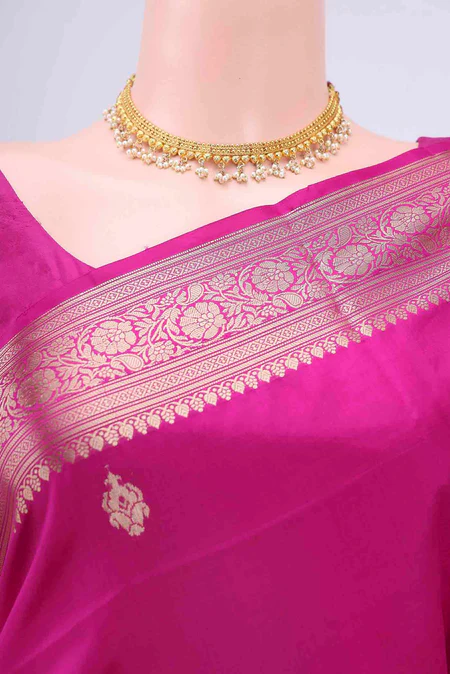
Banarasi sarees are known for their distinctive motifs that carry cultural significance. Popular designs include floral jaals, paisleys, kalga and bel patterns, and Mughal-inspired art. These motifs are often woven with zari, giving the saree a regal glow.
Borders and pallus are usually heavily decorated, adding to the grandeur of the saree and making it suitable for ceremonial occasions.
How to Style Banarasi Sarees for Different Occasions
Wedding Styling
Banarasi sarees are a bridal favourite across India. Pair a richly woven Banarasi saree with traditional gold jewellery, a sleek bun, and minimal makeup for a timeless bridal look.
Festive Occasions
For festivals, choose lighter Banarasi sarees in bright colors like red, green, or royal blue. Style with statement earrings and bangles to keep the look festive yet elegant.
Modern Styling
You can also style Banarasi sarees with contemporary blouse designs like boat necks, elbow-length sleeves, or contrast blouses. This fusion approach adds a modern twist without losing the traditional essence.
How to Identify an Authentic Banarasi Saree
With growing demand, imitation Banarasi sarees are common in the market. Authentic Banarasi sarees usually have a GI (Geographical Indication) tag, intricate handwoven patterns visible on the reverse side, and a slightly uneven weave that reflects handloom craftsmanship.
Pure Banarasi silk sarees also feel rich and soft to touch, unlike machine-made alternatives.
Caring for Your Banarasi Saree
Proper care ensures your Banarasi saree lasts for generations. Always dry clean your saree, store it in a breathable cotton cloth, and avoid direct sunlight. Refolding the saree occasionally helps prevent zari damage.
With the right care, a Banarasi saree can become a cherished heirloom.
Why Banarasi Sarees Are a Worthy Investment
Banarasi sarees are not just fashion pieces—they are assets. Their value lies in craftsmanship, heritage, and timeless appeal. Unlike fast fashion, Banarasi sarees never go out of style and can be worn across generations.
Each saree tells a story of tradition, patience, and skilled artistry, making it a meaningful addition to any wardrobe.
Final Thoughts: The Eternal Charm of Banarasi Sarees
Banarasi sarees beautifully represent India’s cultural richness and textile heritage. From grand weddings to intimate celebrations, they add grace, elegance, and tradition to every occasion.
If you’re looking for a saree that blends heritage with luxury, Banarasi sarees remain an unmatched choice—timeless, elegant, and forever in style.
Banarasi sarees are unique due to their handwoven silk, intricate zari work, and traditional motifs inspired by Mughal art.
Pure silk Banarasi sarees are best suited for occasions, but lighter Banarasi blends can be worn for smaller gatherings.